Heat Management as a Strategic Resource: Why Sweat Beads Lead to Victory
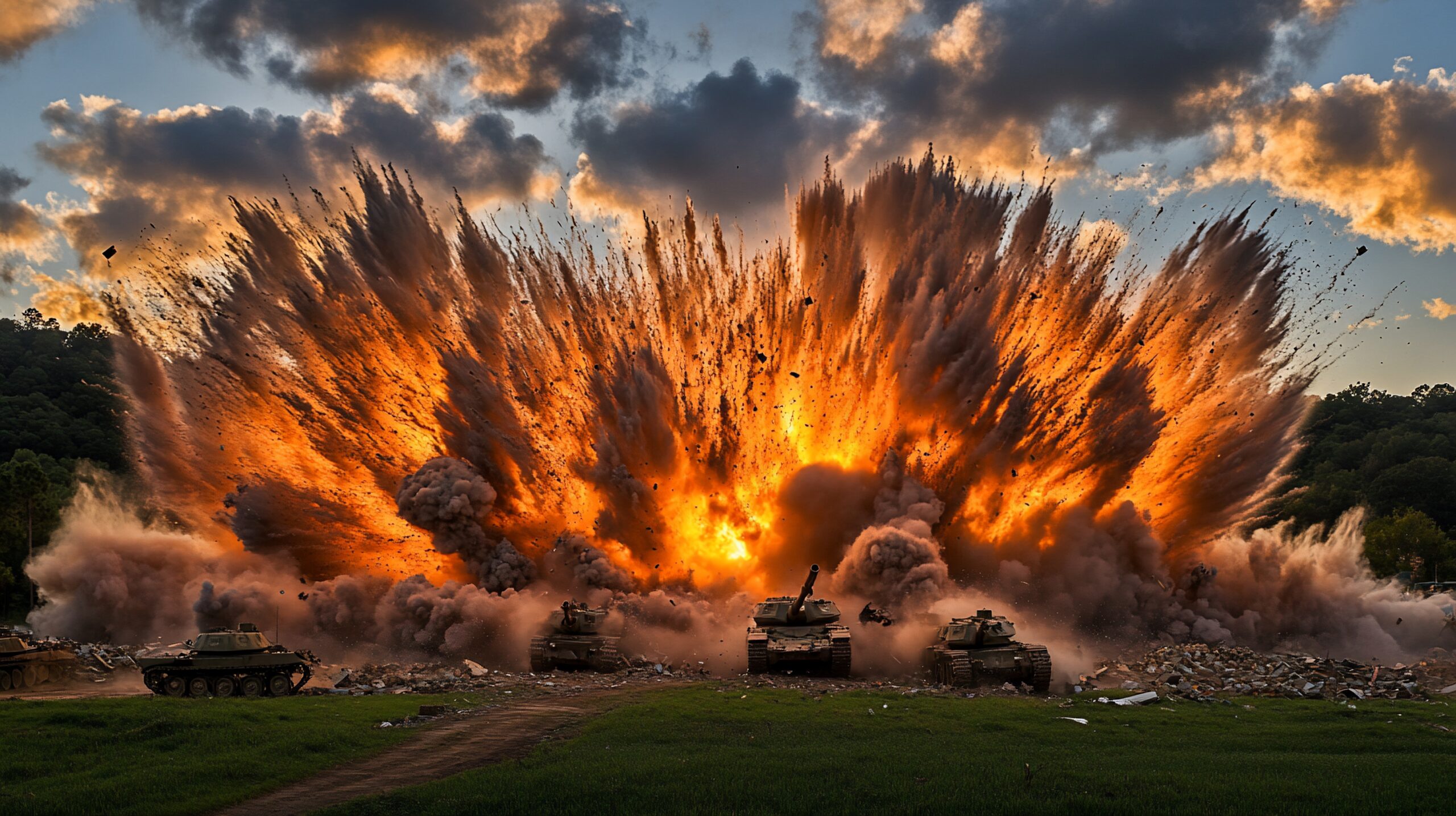
In the world of BattleTech Alpha Strike, there’s one element that beginners often fear and pros treat like currency: heat. While many commanders try to keep their units as “cool” as possible, the true tactical potential lies in controlled escalation. In this article, we’ll dive deep into the thermodynamics of the game and explain why heat isn’t a technical flaw, but rather one of your most powerful tools on the battlefield.

Introduction: Heat Is Not a Flaw, but a Tool
Players coming from classic BattleTech (Total Warfare) are used to keeping track of every single heat point each round. Every movement, every laser beam counts. In Alpha Strike, this system has been radically simplified—and that’s exactly where the strategic appeal lies. We’re dealing with a largely binary system: A Mech is either operating within its normal range or using its Overheat (OV) value to generate additional destructive power.
The big advantage in Alpha Strike: Heat is much more predictable. Heat doesn’t just build up here from firing standard weapons; it’s a conscious decision. You’re the one who turns the dial up.
The Mechanics of Overheating: Price and Performance
Before we get into tactics, let’s take a quick look at the hard facts. Any unit with an OV value can decide during the attack phase whether to use all or part of it.
- The bonus: You add the selected OV value to your damage at short (S) or medium (M) range. For long range (L), the OVL ability is required .
- The consequences: In the final phase, the heat is marked on the heat scale. This has a direct impact on the next round:
- Heat Level 1: -1 to speed (MV) and a +1 penalty on all damage rolls.
- Heat Level 2: -2 to MV and +2 to attack rolls.
- Heat Level 3: -4 to MV and +3 to attack rolls.
It’s a classic trade-off: immediate firepower versus future mobility and precision.
Tactical Scenarios for Controlled Overheating
So when is it worth driving the Mech “red”? Here are two classic scenarios:
1. The Finisher: Sealing the Deal Nothing is more frustrating than an enemy mech that remains on the field with just one structure point left and threatens your flank next turn. If the odds suggest that you’re missing exactly that one damage point, Overheat is the answer. At that moment, it doesn’t matter if your mech’s accuracy drops next round—the opponent won’t even be able to fire anymore.
2. Barrage: Static Defense Sometimes you’ll need to hold a mission marker or block a chokepoint. When a mech is in a defensive position with good cover (in woods or behind partial cover), it can afford to remain stationary. Use maximum firepower to prevent the enemy from advancing. Even if you’re nearly immobilized afterward, you’ll force the enemy into risky maneuvers or a retreat.
Unit Synergies: The Glass Cannons
Some mechs are true overheat monsters. Units with an OV value of 2 or higher often act as “glass cannons.” They’re designed to charge in during a decisive phase, unload all their weapons, and then—hopefully protected by teammates—cool down again.
When planning your team, be sure to mix units with high base damage (without heat) with OV specialists. While your durable mechs maintain constant pressure, the OV mechs step in to absorb peak damage or take out the enemy’s key units.
Risk Management: The Danger of the “Vicious Cycle”
If you get too greedy, you’ll quickly find yourself in what’s known as the “death loop.” If you overheat, your speed will drop.
- The problem: You slow down → You’re easier to hit → You lose armor → You have to retreat, but you’re too slow to reach cover.
In addition, heat tracking depends heavily on initiative. If you lose initiative while overheated, your opponent can easily outmaneuver you, since they know exactly how limited your range of action is this round. So it’s best to overheat only if you can ensure that, in the next round, you’ll either not be out in the open or have enough support.
Conclusion: Heat as the Currency of Victory
In Alpha Strike, heat isn’t a sign of poor design—it’s a strategic resource. Think of it as a currency: you spend mobility and future precision to buy immediate results. A successful mech strategist knows when to open the vault and when to save.
Always remember: A mech that’s destroyed without a fight hasn’t reached its full potential. Use the OV value to force the momentum, but always have a plan for what comes next.
Transparency notice on the use of AI (in accordance with the EU AI Act):
The content of this blog is personally conceived, researched and defined by me. I use generative artificial intelligence to help me formulate and structure the texts.
Why? This enables me to prepare complex issues more precisely and to focus fully on the quality of the content and research. The final editorial control and responsibility for all published content lies solely with me.
Together for better content!
This blog is a project of the heart that can only continue to grow with your help. Every comment, every recommendation – and especially your financial support – secures the future of this platform.
Do you want this content to remain freely accessible?
This is how you can support the mission:
- NEWSLETTER REGISTRATION: Become part of the fast-growing community and never miss an update again!
- BECOME A PATREON MEMBER: Join the inner circle and get access to exclusive material and early releases.
- OTHER SUPPORT: Whether it’s a donation, sharing a post or recommending the blog to others – every form of support counts!
Let’s make this blog an even better place together!
Ich bin Sören Spieckermann, der Kopf hinter mechstrategen. Seit Jahren faszinieren mich taktische Tabletop-Schlachten und die strategische Tiefe von Mechs. Ob schnelle Gefechte in Halo: Flashpoint oder epische Schlachten bei BattleTech Alpha Strike – hier teile ich meine Erfahrungen und Taktiken mit dir. Mein Ziel? Sowohl Einsteigern den Start zu erleichtern als auch alten Hasen neue Impulse für das nächste Match zu geben.