Halo: Flashpoint – The close combat
In the universe of Halo: Flashpoint it’s not just projectiles flying through the air – sometimes it’s at arm’s length. Melee combat is a central element of the game, especially when Spartans with energy swords, elite warriors with blades or Brutes clash with brutal force. In this article, we take a closer look at the melee rules and explain the basic principles.
When will it come to hand-to-hand combat?
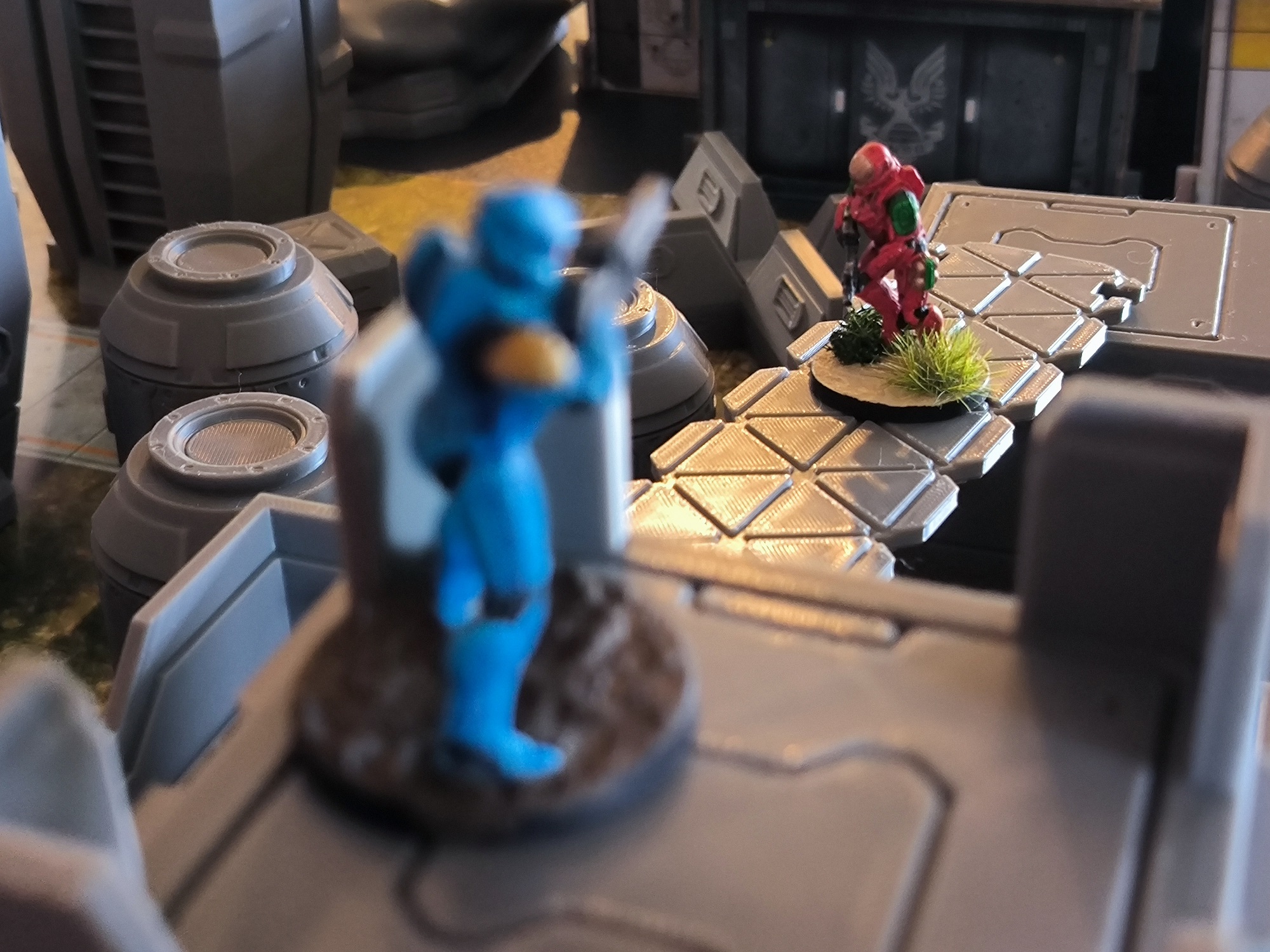
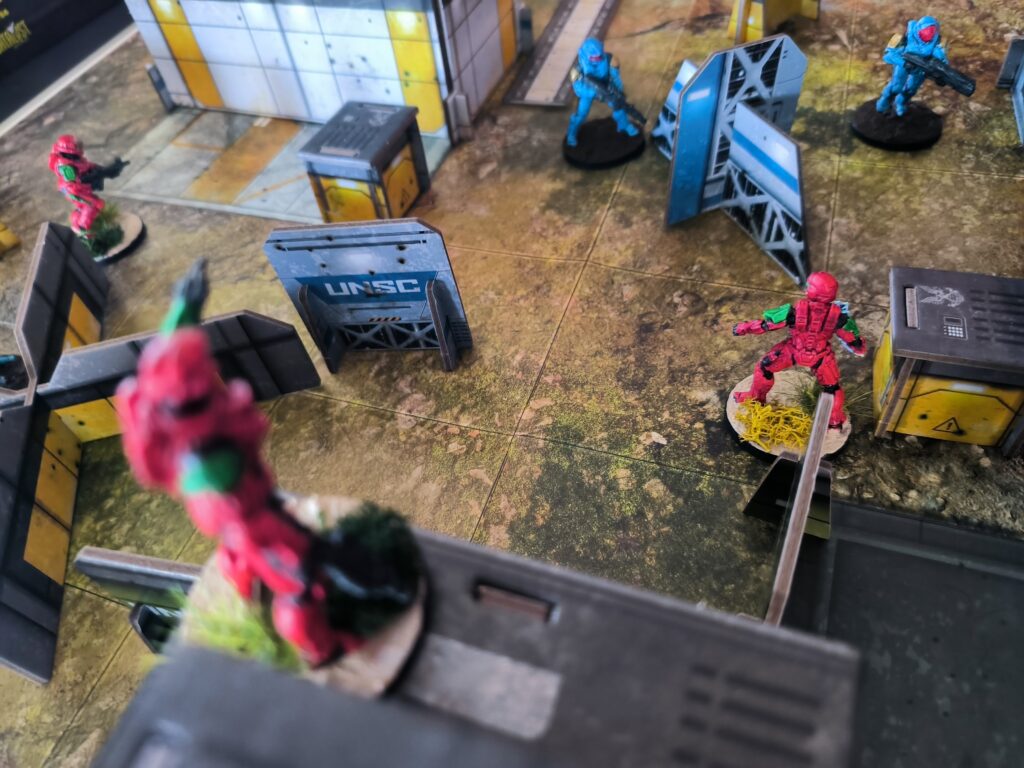
A model can attack an opponent in melee if it is in the same dice (cube) as an enemy model. There are two ways to do this:
- Targeted attack: A model in the same cube can start melee combat as a long action.
- Assault: If a model moves into an opponent’s cube, melee combat is automatically triggered – free of charge as an additional action. This makes melee combat dynamic and rewards offensive moves.
- Detaching from the opponent: If a model moves out of a cube containing an opponent’s figure (i.e. if you were in close combat), the opponent receives a free melee attack.
Weapons in close combat
Only weapons with the range “CC” (Close Combat) may be used. If a model has several close combat weapons, the player must choose one before dicing. The characteristics and keywords of this weapon then apply to the attack.
The procedure
In close combat, there is a direct comparison of two dice tests:
- The attacker: performs a Fight test with 3 dice. Each dice value rolled that is at least equal to the value on the unit card for close combat counts as a success.
- Modifiers can bring additional dice:
- +2 dice if the attack was triggered by a movement.
- +1 dice if a friendly model is in the same cube.
- +1 dice if the target is injured.
- +1 dice if the target was on the ground at the start of the action (pinned).
- Modifiers can bring additional dice:
- The objective: perform a Survive test with 3 dice at the same time. Each dice value rolled that is at least equal to the value on the unit card for survival counts as a success.
- There are bonuses here too:
- +1 dice if there is another friendly model in the cube.
- +1 dice if the attacker is injured.
- There are bonuses here too:
Who will win the melee?
Both players count their successes.
- Attacker wins: The difference in successes corresponds to the number of hits the target suffers. Depending on the weapon, additional effects may occur – such as knockback, which pushes the opponent back.
- Defender wins or tie: Nothing happens, the melee ends.
Conclusion: Direct, brutal and risky
Close combat in Halo: Flashpoint from Mantic Games is fast and hard. A bold assault attack can give you the decisive advantage – especially with powerful CC weapons such as energy swords or brute hammers. At the same time, it involves risk: if the opponent rolls well, you come away empty-handed.
This makes melee combat an exciting tactical element that allows players to dominate the battlefield with clever positioning, ranged attacks as well as powerful attacks.
In short, melee combat in Halo: Flashpoint is a risky but often game-changing weapon in any unit’s arsenal.