Class instead of mass? The ultimate guide to skill value in BattleTech Alpha Strike
When you’re writing your army list for the next BattleTech Alpha Strike match, you probably often stare at this one, inconspicuous value: Skill.
By default, most units come with a skill of 4. It’s tempting to simply upgrade everything to skill 3 or 2 to achieve “elite status”. Or downgrade everything to skill 5 to get more mechs on the table. But where is the sweet spot? When is it worth investing precious points (PV), and when is it a waste of points?
In this guide, we dive deep into the math and tactics behind the skill value.
Why Skill 4 is the standard (and the problem)
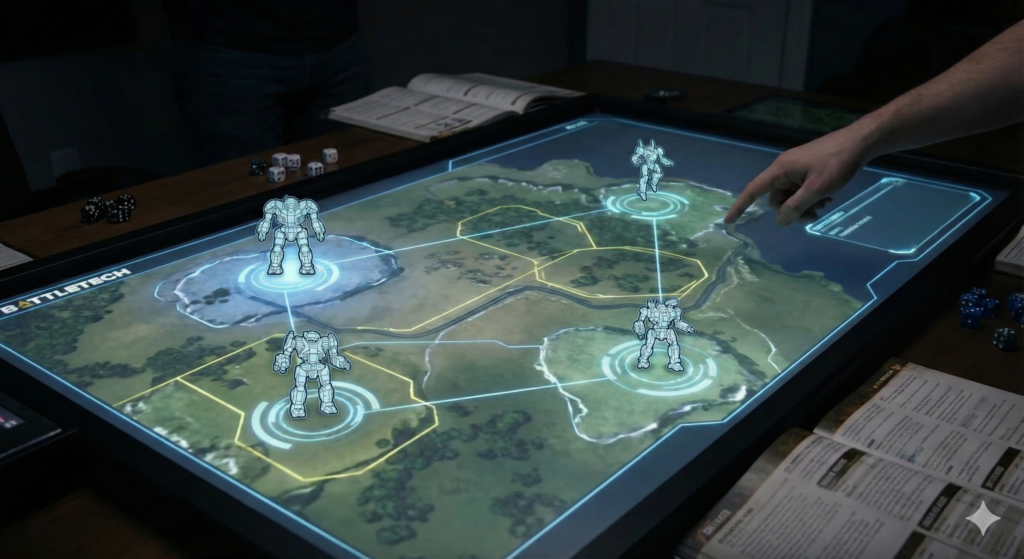
In Alpha Strike, the skill value determines your base target number (SATOR). The calculation is simple: Skill + Reichweite + Bewegung des Ziels + Gelände + Sonstiges = Benötigter Wurf (2W6)
A skill of 4 is solid. But we are playing a game with 2D6
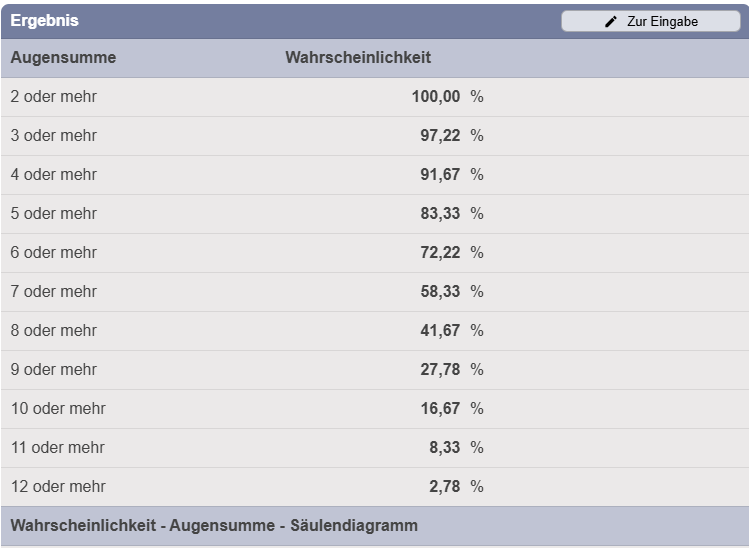
- To dice a 7+ (average), you have a 58.3% chance.
- If you lower the skill to 3 (and only need a 6+), the chance increases to 72.2%.
That’s a huge leap! A single point improvement in skill massively increases your hit probability in the relevant midfield. But this improvement costs points (PV). Let’s take a look at where they are well invested.
When is an upgrade worthwhile? (Skill 3, 2 or even 1)
You should upgrade the skill if the mech fulfills a role where reliability is more important than durability, or if the points investment is very good in relation to the damage.
1. the “glass cannons” and high-damage dealers
If you have a mech that deals 5, 6 or more damage at short or medium range (e.g. Hunchback, Warhammer, many clan mechs), then this shot has to work.
- Why? If a 6-damage attack misses, you have effectively “wasted” 6 points of damage for that round. An upgrade to skill 3 ensures that this massive damage actually reaches your opponent.
2. fast jumpers and “backstabbers”
Light mechs like the Jenner, Spider or Wraith live from their movement. They often have to jump (which gives +2 to their own target value if you jump and shoot) to get to the enemy’s back.
- The problem: Skill 4 + jumping (+2) = you start at 6 before you’ve even calculated range or enemy modifiers. You hit almost nothing.
- The solution: A skill of 2 or 3 compensates for the jump penalty. A Wraith with skill 2 is a nightmare that almost always hits, even if it jumps far.
3. units with “overheat” capability (OV)
Units that can run hot to do more damage (OV value) should almost always have better pilots.
- Why? If you overheat, you risk losing movement or shutting down on the next lap. If you take this risk and still miss, it’s doubly painful. A good pilot makes sure that the risk is worth it.
4. sniper with extreme range
Units that are to fight at “Long” (L) range automatically receive a +4 modifier for range.
- Skill 4 + 4 (Long) = 8. If the target moves (+2 TMM) and stands in the forest (+1), you need an 11. Almost impossible (8.3% probability).
- With Skill 2 this is a 9. Still difficult, but doable (27.8% probability, significantly better than with Skill 4).
- If you then use the sniper tactic and have stopped with the unit, you have another -1, which in our example here would mean a probability of 41.7%.
When is a devaluation worthwhile? (Skill 5 or worse)
Not every mech has to be an elite warrior. Sometimes “mass” (more armor/structure on the field) is better than “class”.
1. the “bullet catchers” (Meatshields)
Units like the Atlas or Banshee in certain variants have extremely high armor (A) and structure (S), but often moderate damage in relation to this.
- Tactics: If you take a mech with you primarily to hold mission objectives and draw fire, skill 5 is enough. It is there to stand in the way, not to win the game on its own. The devaluation makes it cheaper, so you can take another tank or infantry with you.
2. C3 network units (spotters)
This is a special case. If you play a C3 network, you often need “spotters” who run close to the enemy. Since C3 calculates the range for the lance, the spotter himself often doesn’t have to shoot at all (or hits badly anyway because he’s running).
- Here you can save points by giving the spotter a lower skill, as long as it only serves to provide target acquisition for the snipers in the background (who in turn should have skill 2 or 3!).
3. indirect fire (IF) & LRM boats (sometimes!)
This sounds counterintuitive, but: If you have a unit that only fires indirectly (IF), it often gets high bonuses (+1 for IF, +1 per spotter movement, etc.).
- Sometimes it is better to take two Archer or Catapults with skill 5 and “flood” the area with missiles (fishing for the double-6 crit hit) than to have an expensive one with skill 2. But that depends a lot on your play style.
4. melee fighter (Melee & Charge)
Physical attacks also use the skill value in Alpha Strike, but often specialized melee units (like a Charger or fast Hovercrafts) are so cheap that you’d rather use them as a “throwaway weapon”. If a cheap hovertank crashes into the enemy (Charge), the skill is almost irrelevant as long as the mass is right.
3 golden rules for your army list
When spending points on skill, keep these three aspects in mind:
1. the “expensive units paradox”
The point costs (PV) for skill upgrades are percentage-based. This means that upgrading a 50-PV mech to skill 2 costs a lot of points. Upgrading a 20-PV tank to skill 2 is dirt cheap.
- Tip: It is often more worthwhile to upgrade medium-grade units (25-35 PV) than to make the already expensive Assault Mechs even more expensive. A Timber Wolf (Mad Cat) is often more efficient with skill 3 than with skill 2, because otherwise it ties up too many points in a single basket.
Example:
Mad Cat (Timber Wolf) Prime:
- Skill 4: 54 PV
- Skill 3: 65 PV
- Skill 2: 76 PV
2. the initiative sink
In Alpha Strike, the number of units is important for the initiative. If you upgrade all your units to skill 1 or 2, you may only have 4 mechs on the table, while your opponent with skill 4 has 8 units.
- The enemy will outmaneuver you. He can wait until your few elite units have moved and then stab you in the back. Don’t overdo it with the upgrades, otherwise you will be outnumbered.
3. the “magic 7”
Try to build your list so that your main sources of damage have to dice on 7 on average.
- Do a quick calculation: My skill (3) + average range (medium +2) + opponent TMM (+2) = 7.
- If you notice that you often need a 9 or 10 for your main attacks, you need to improve the skill.
Conclusion: balance is the key
Let the skill value of 4 be your anchor, but don’t be afraid to adjust it.
- Make your Strikers and Flankers deadlier (skill 2-3).
- Keep your blockers and tanks cheaper (skill 4-5).
- Avoid pure “skill 0/1 heroes” unless you are playing a scenario. One lucky hit to the opponent’s head and 100 points are gone.
Transparency notice on the use of AI (in accordance with the EU AI Act):
The content of this blog is personally conceived, researched and defined by me. I use generative artificial intelligence to help me formulate and structure the texts.
Why? This enables me to prepare complex issues more precisely and to focus fully on the quality of the content and research. The final editorial control and responsibility for all published content lies solely with me.
Together for better content!
This blog is a project of the heart that can only continue to grow with your help. Every comment, every recommendation – and especially your financial support – secures the future of this platform.
Do you want this content to remain freely accessible?
This is how you can support the mission:
- NEWSLETTER REGISTRATION: Become part of the fast-growing community and never miss an update again!
- BECOME A PATREON MEMBER: Join the inner circle and get access to exclusive material and early releases.
- OTHER SUPPORT: Whether it’s a donation, sharing a post or recommending the blog to others – every form of support counts!
Let’s make this blog an even better place together!