More realism on the battlefield: the “Forced Withdrawal”
In many pick-up games (quick casual games), the mentality is often simple: every unit fights to the bitter end. It’s a “last man standing” scenario where losses don’t matter as long as victory is achieved.
But for players who prefer a deeper, more realistic simulation – or who are in the middle of a long campaign where resources are precious – this style of play is often unsatisfactory. This is where the optional Forced Withdrawal rule from the Commander’s Edition (version 7 page 126) comes into play. It simulates the survival instinct of the crew and the tactical preservation of material.
What happens in the event of forced withdrawal?
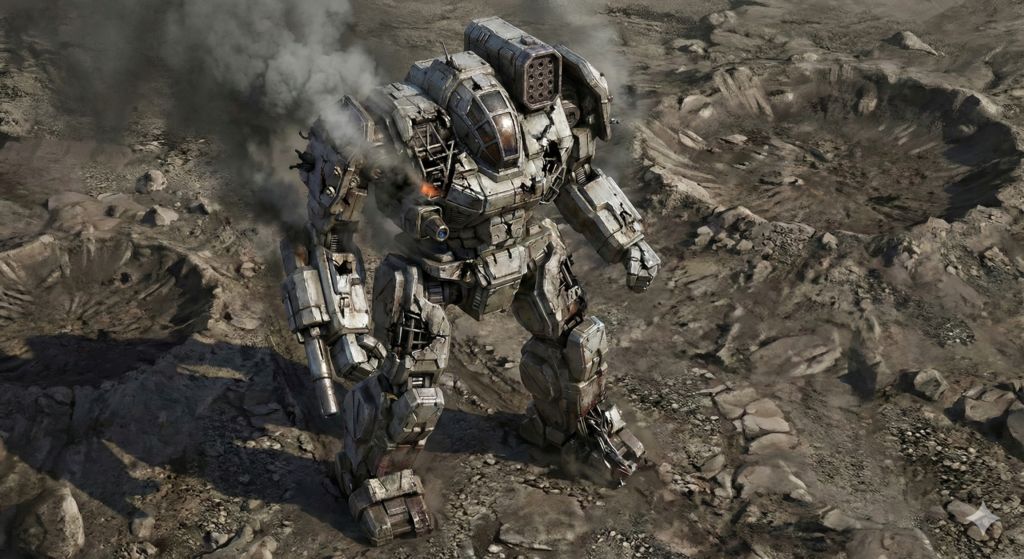
As soon as a unit is considered severely damaged (crippled), its priority changes from “attack” to “survive”. The unit breaks off the battle and attempts to leave the playing field.
The rules for withdrawal are strict:
- Objective: The unit must move to its ownhome map edge.
- Speed: She must use her full range of movement to reach this target as quickly as possible.
- Type of movement: Jumping or sprinting is permitted but not compulsory.
- Safety: The unit may avoid terrain that is forbidden or would cause it further damage.
- Facing: At the end of the movement, the unit may choose anyfacing (e.g. to still show the enemy the front armor).
- Combat: The unit may continue to shoot in the combat phase
As soon as the unit reaches its own edge of the playing field, it is removed from the game and is considered successfully withdrawn.
When is a unit considered severely damaged (crippling damage)?
Not every scratch justifies an escape. A unit is only subject to Forced Withdrawal if it fulfills one of the following criteria:
1. structural collapse
The unit no longer has armor and its structure has been reduced to half (or less) of its starting value (rounded up).
Special rule: If a unit has only 1 structure point from the start, it begins its retreat as soon as the armor is destroyed.
2. loss of offensive range
The unit has been so badly damaged that its damage value for both medium and long range has dropped to 0.
Exception: This does not apply if the unit has already started the scenario without ranged combat abilities (0 damage at medium and long range). A pure melee fighter does not flee just because he has no ranged weapons.
3. inability to move
The unit has been immobilized by damage, critical hits or motive hits.
(Note: Since an immobilized unit cannot physically move to the edge, it is often considered abandoned/lost in a campaign or the crew drops out, depending on the extended campaign rules).
Practical example: the withdrawal of the “Thunderbolt”
To illustrate the rules, let’s look at a game situation with a Thunderbolt mech.
Status at the start of the game:
- Structure: 6 points
- Armor: 7 points
- Movement: 8 inch
- Weapons: Damage available at medium and long range.
The combat situation: The Thunderbolt comes under heavy fire. It loses all of its armor (0 armor remaining). It also suffers 3 points of structural damage.
- Remaining structure: 3 points.
The check: The player now checks the Forced Withdrawal rule:
- Is armor available? No.
- Has the structure fallen to half its starting value?
- Starting value: 6.
- Half: 3.
- Current value: 3.
- Result: Yes, the condition is fulfilled. The mech is considered “Crippled”.
The execution (next round): The Thunderbolt must now retreat. Its own edge of the field is in the south.
- Movement: He must use his full movement of 8 inches to move south. He chooses not to sprint to avoid shooting penalties (he may retreat while defending).
- Obstacle: There is a lava field on the direct route (prohibited/damaging terrain).
- Maneuver: He may bypass the lava field, even if this temporarily lengthens the path to the edge.
- End position: At the end of his movement, he turns the mech so that it continues to face the pursuing enemy and fires back as he approaches the edge of the field step by step.
Conclusion
The Forced Withdrawal rule fundamentally changes the dynamics of a battle. Instead of completely destroying every mech or vehicle, players must learn to shoot enemies “incapacitated” to force them to retreat. This speeds up the gameplay and gives campaigns the necessary weight: a retreat today means that the unit can be repaired and fight again tomorrow.
Transparency notice on the use of AI (in accordance with the EU AI Act):
The content of this blog is personally conceived, researched and defined by me. I use generative artificial intelligence to help me formulate and structure the texts.
Why? This enables me to prepare complex issues more precisely and to focus fully on the quality of the content and research. The final editorial control and responsibility for all published content lies solely with me.
Together for better content!
This blog is a project of the heart that can only continue to grow with your help. Every comment, every recommendation – and especially your financial support – secures the future of this platform.
Do you want this content to remain freely accessible?
This is how you can support the mission:
- NEWSLETTER REGISTRATION: Become part of the fast-growing community and never miss an update again!
- BECOME A PATREON MEMBER: Join the inner circle and get access to exclusive material and early releases.
- OTHER SUPPORT: Whether it’s a donation, sharing a post or recommending the blog to others – every form of support counts!
Let’s make this blog an even better place together!